
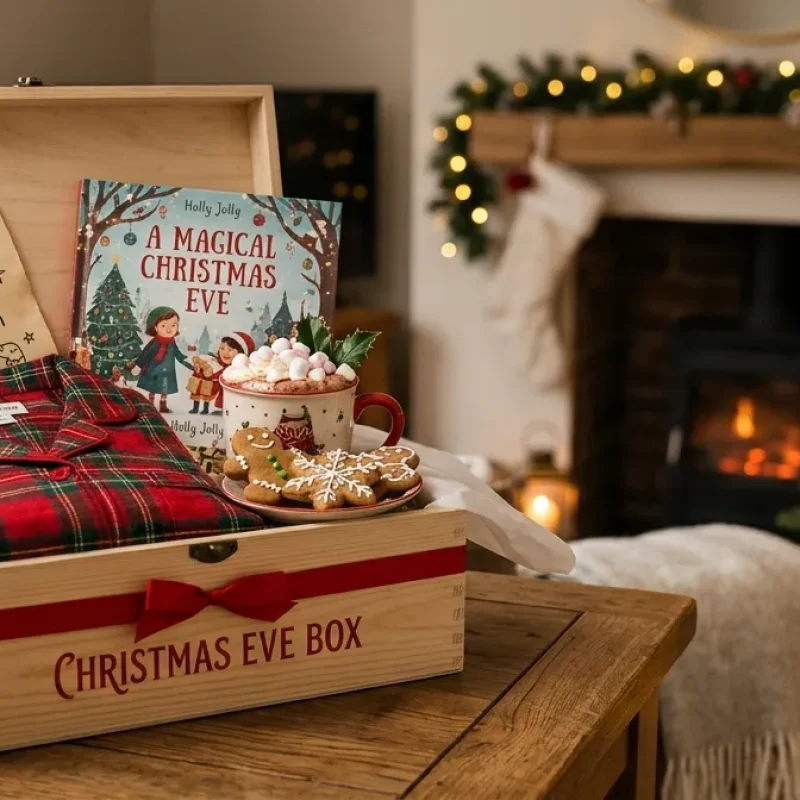

Christmas Eve can be the most exciting night of the year, and also the hardest one to settle. Children are buzzing, the house is busy and bedtime can feel a long way off. A Christmas Eve box helps. It turns those last few hours into a calm, cosy ritual that leads gently towards sleep.
Knowing what to put in a Christmas Eve box is the tricky part. It’s easy to overspend, overfill or end up with a pile of sweets and plastic that does the opposite of what you intended.
This guide walks you through it step by step. You’ll find the classic contents, ideas for every age from babies to adults, filler suggestions, sample boxes at three budgets, UK safety checks, and advice on choosing, packing and timing the box itself.
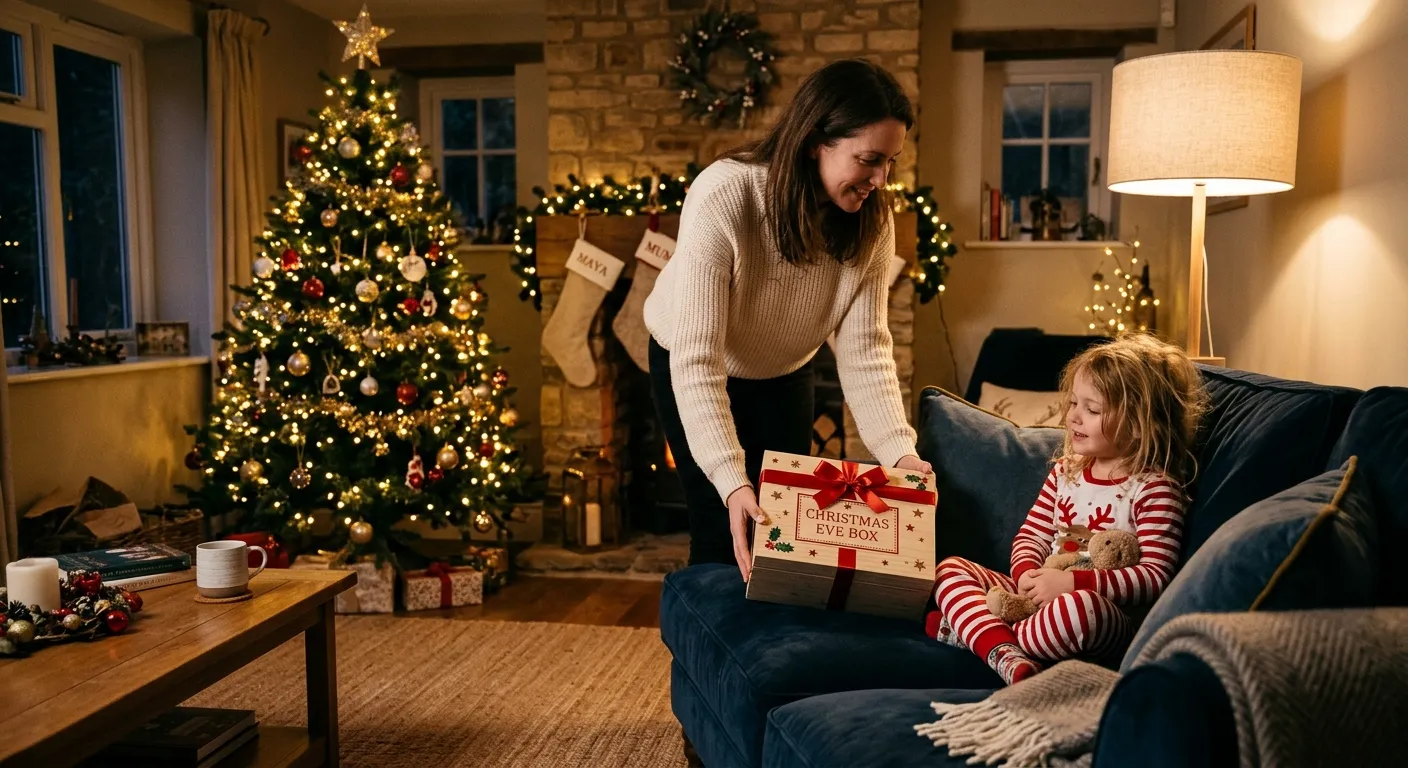
A Christmas Eve box is a small gift given on 24 December, usually in the late afternoon or early evening. It holds a handful of items designed to help children, and often the whole family, wind down before the big day.
The idea is simple. Instead of letting excitement build until bedtime, the box gives everyone something calm to focus on: new pyjamas to change into, a film to watch together, a warm drink and a story before bed. It also marks the moment Christmas properly begins.
The tradition has a loose cousin in Iceland, where families give books on Christmas Eve and spend the evening reading. The modern Christmas Eve box borrows that same spirit of slowing down. It isn’t a second round of presents. It’s a bridge between the rush of December and the magic of Christmas morning.
For many families, the box itself becomes part of the tradition. The same container comes out every year, and children learn to look forward to it as much as to anything under the tree.
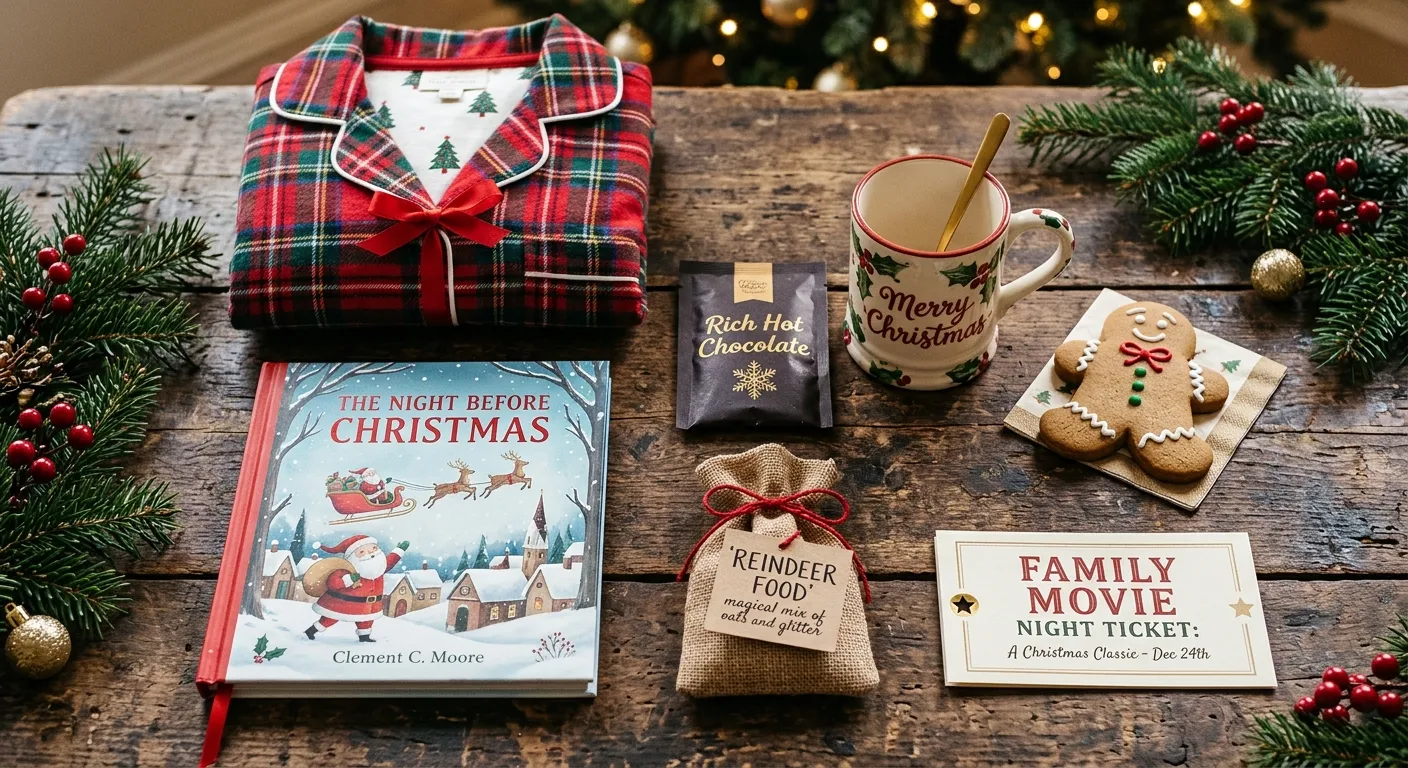
Most Christmas Eve boxes follow a simple five-part formula: something to wear, something to watch, something to read, something to eat or drink, and something to do. Fill each slot once, and you’ll have a balanced box that supports a calm evening without overbuying.
New pyjamas are the anchor item in almost every Christmas Eve box. Children can change into them straight away, wear them for Christmas morning photos and keep using them through the holidays. Warm socks or slipper socks make a good addition, especially in colder homes.
A festive film gives the evening a shared focus. A DVD works well, or you can rent a film digitally and add a printed “cinema ticket” to the box so there’s still something to unwrap. For young children, a short animation suits bedtime better than a full-length film.
A Christmas storybook is the natural final step of the evening. It brings everyone back to a quiet, close moment before lights out. A new picture book, a festive paperback or a pre-loved favourite all work.
Hot chocolate is the classic choice, often with marshmallows and a festive mug. A gingerbread biscuit, a small bag of popcorn for film night or a clementine add a treat without tipping the evening into a sugar rush.
This slot gives children a small job or activity. Reindeer food to sprinkle in the garden, a letter from Father Christmas or a simple festive craft all keep hands busy and build the magic of the night.
The five-part formula works at every age, but what fills each slot should grow with the person opening the box.
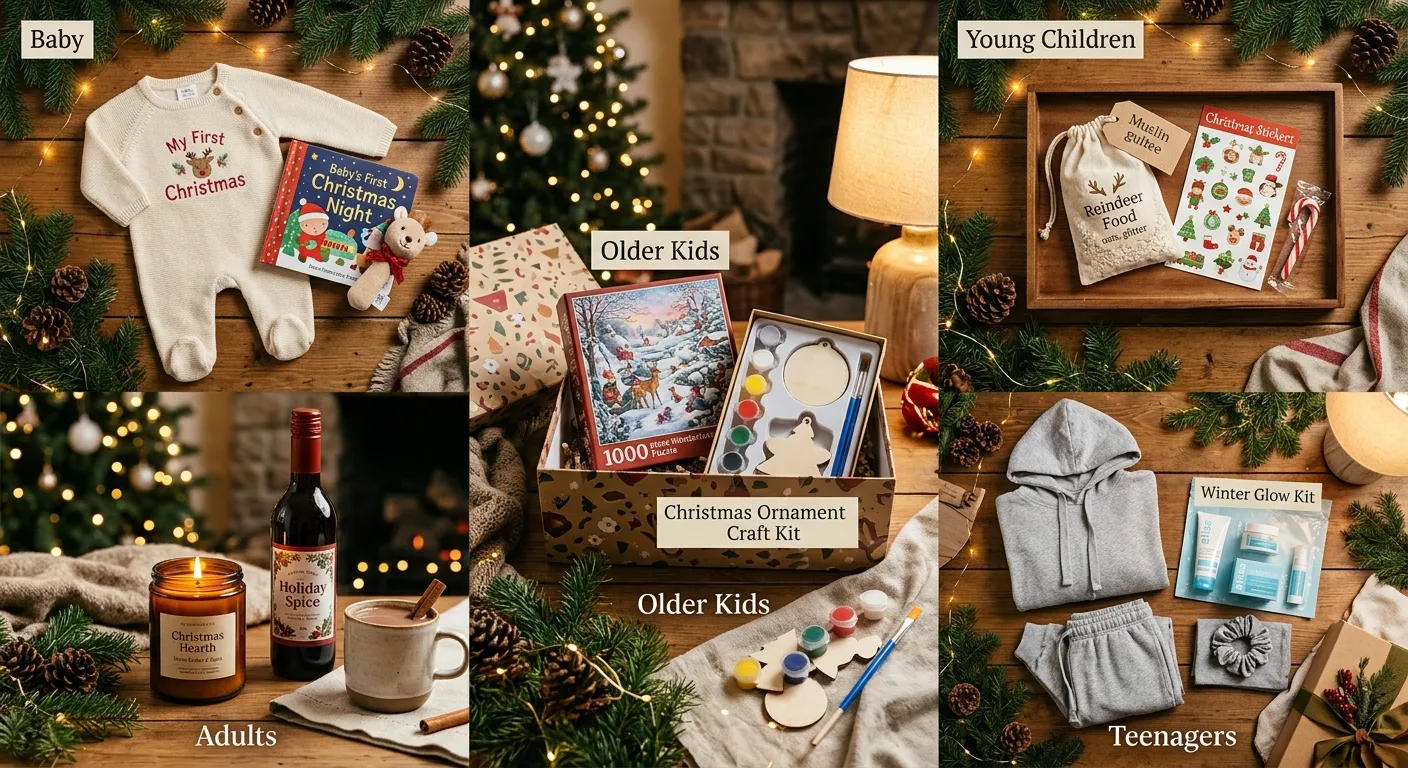
The best Christmas Eve box suits the age and stage of the person opening it. A toddler needs soft, safe and sensory items. A teenager wants comfort and a nod to their own style. Adults simply want a cosy, indulgent evening.
If you’re deciding what to put inside a Christmas Eve box for a particular person, start with their age, then fill each slot with items that suit their stage.
Babies and toddlers won’t remember the box, but they will enjoy textures, sounds and bright colours. For parents, a first Christmas Eve box is often about keepsakes as much as play.
Good choices include:
Why these work: Children under three explore by touching, grabbing and mouthing. Soft, washable and chunky items match how they play and keep the evening calm.
Safety note: Toys with small parts are not suitable for children under three because of the choking risk. Leave out hard sweets, foil-wrapped chocolate coins, and anything with button batteries or loose magnets. If you want an edible treat, choose a baby-friendly snack made for their age. You’ll find fuller safety checks later in this guide.
This is the peak age for Christmas magic. Most children between four and seven believe wholeheartedly in Father Christmas, which makes the “something to do” slot the star of the box.
Popular things to put in a Xmas Eve box for this age include:
Why these work: Young children love rituals and make-believe. Items linked to Father Christmas’s visit give them a role in the evening, such as sprinkling reindeer food or leaving out a carrot. That channels their excitement into something calm and purposeful.
Children in this age group are more independent, and some will have started to question the magic. Their box should give them something absorbing to do, with a little festive fun for those who still believe.
Ideas that work well:
Why these work: Children aged eight to twelve enjoy challenges and like to feel grown-up. A hands-on activity keeps them busy without screens and gives the evening a calm focus. If they still believe, add one magical touch, such as a North Pole letter, to keep the tradition going.
By the teenage years, the box shifts away from magic and towards comfort, treats and personal taste. Teenagers still appreciate the ritual, especially if they’ve had a Christmas Eve box since they were small. They just want it to feel age-appropriate.
Good choices include:
Why these work: Teenagers care about identity and independence. Choosing items that reflect their interests shows you’ve noticed who they are, which matters more to them than any novelty.
Christmas Eve boxes aren’t just for children. Grown-up boxes are a lovely way for couples, friends and adult family members to mark the start of Christmas with a relaxed evening in.
Ideas for adults include:
Why these work: Adults rarely need more things. What they value is time to slow down. Items that invite a quiet night in, such as a candle, a film or a glass of something warming, fit the purpose of the box perfectly.
Tall items such as a bottle of fizz need the right container. A large white twist handle paper bag at 41cm high holds a bottle upright alongside snacks and a candle.
A family box is one shared box for the whole household, instead of a separate box for each person. It’s a practical choice for larger families or for anyone trying to keep costs and clutter down.
Shared items that work well:
Why these work: A shared box puts the focus on time together rather than individual gifts. It saves money, takes up less space and avoids comparisons between siblings.
In short: Magic matters most for young children. Activities suit older children, and comfort and personal taste take priority for teenagers and adults.
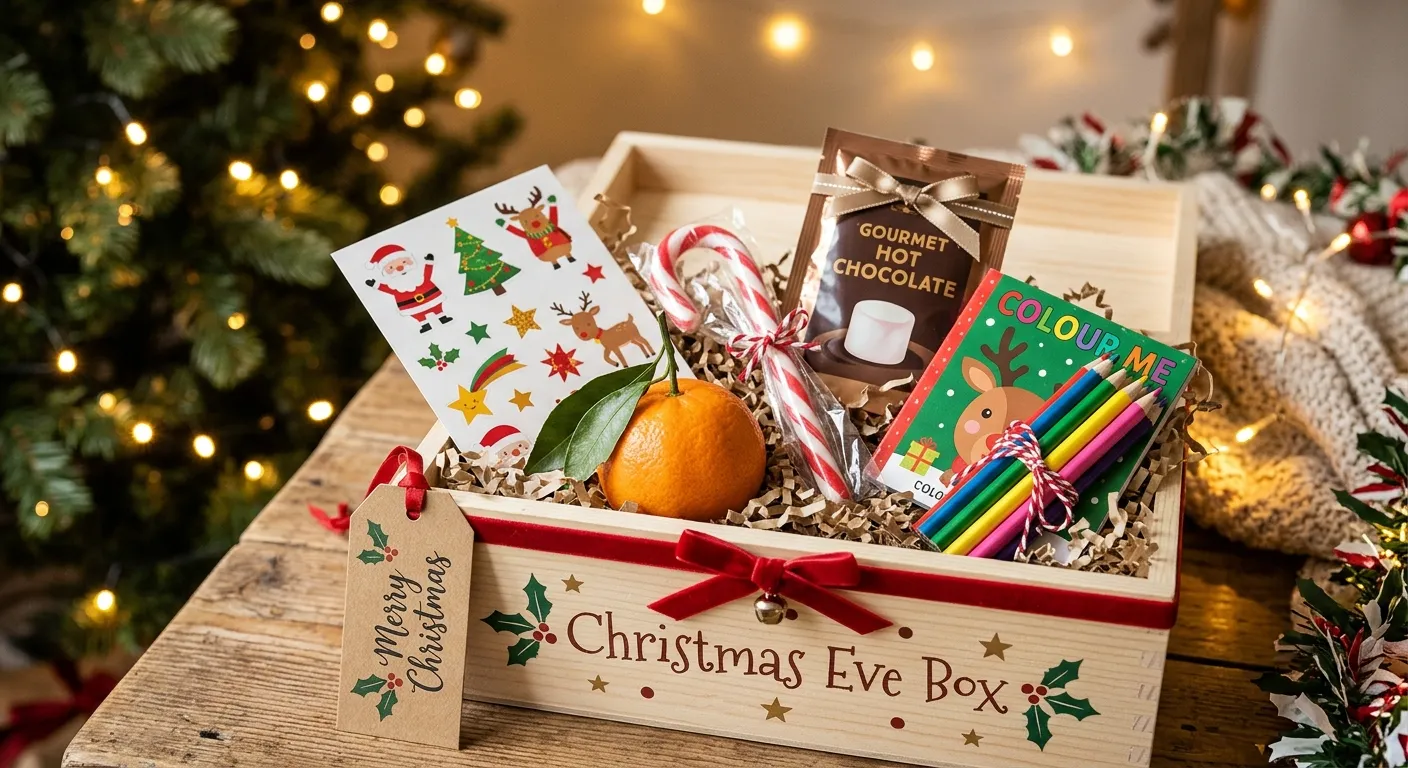
Once the main items are chosen, small fillers are what make a box feel full and generous. The best fillers for a Christmas Eve box still serve its purpose of calm, connection and a little festive magic. They shouldn’t become a pile of plastic that’s forgotten by Boxing Day.
Fillers fall into four groups: fun extras, edible treats, practical items and decorative padding. Choosing from each group helps you fill space with intention, rather than grabbing whatever is on offer by the till.
Fun fillers add surprise and give children something to discover as they dig through the box. These Christmas Eve box filler ideas work well for children aged four and over:
When they work best: Fun fillers suit younger children, who enjoy rummaging and finding several small things. Choose items that fit the evening’s quiet mood. A sticker sheet keeps hands busy at the table, while a noisy toy undoes the calm you’re trying to create.
Edible fillers are popular because they get eaten rather than stored, so they leave no clutter behind. Good options include:
Check labels carefully if a child has an allergy, and leave hard sweets, candy canes and popcorn out of boxes for under-fives. Keep portions small too. A few treats feel special, but a sugar rush at 7pm makes bedtime harder for everyone.
Useful items are often better fillers than novelty extras. Cheap plastic toys tend to break, get lost or end up in the bin within days. A practical filler gets used through the holidays and beyond, so you get more value from the same budget.
Practical ideas include:
When they work best: Practical fillers suit every age, but they matter most when you want less clutter or a box that feels thoughtful rather than just full. Many tie into the bedtime routine, too. A new toothbrush, used on Christmas Eve, quietly signals that it’s nearly time for sleep.
Some of the most memorable fillers cost almost nothing. Homemade touches add a personal feel that shop-bought items can’t match.
Try these:
When they work best: DIY fillers suit tighter budgets and families who want each box to feel personal. Vouchers work well for children who have grown out of small toys but still enjoy a playful surprise.
Padding does two jobs. It makes a box look full when it’s opened, and it protects items such as mugs, jars and bath bombs. A layer of tissue or shredded paper also hides the contents, so children have something to unwrap before they reach the main items.
Simple padding ideas:
Paper-based padding suits the classic, cosy look of a Christmas Eve box and is easier to recycle than plastic shred or cellophane. You’ll find finishing touches among The Paper Bag Store’s gift wrapping accessories, which help the presentation match the care you’ve put into the contents.
Quick recap: Add one or two fun extras, a small edible treat, something practical and enough padding to make the reveal feel special.
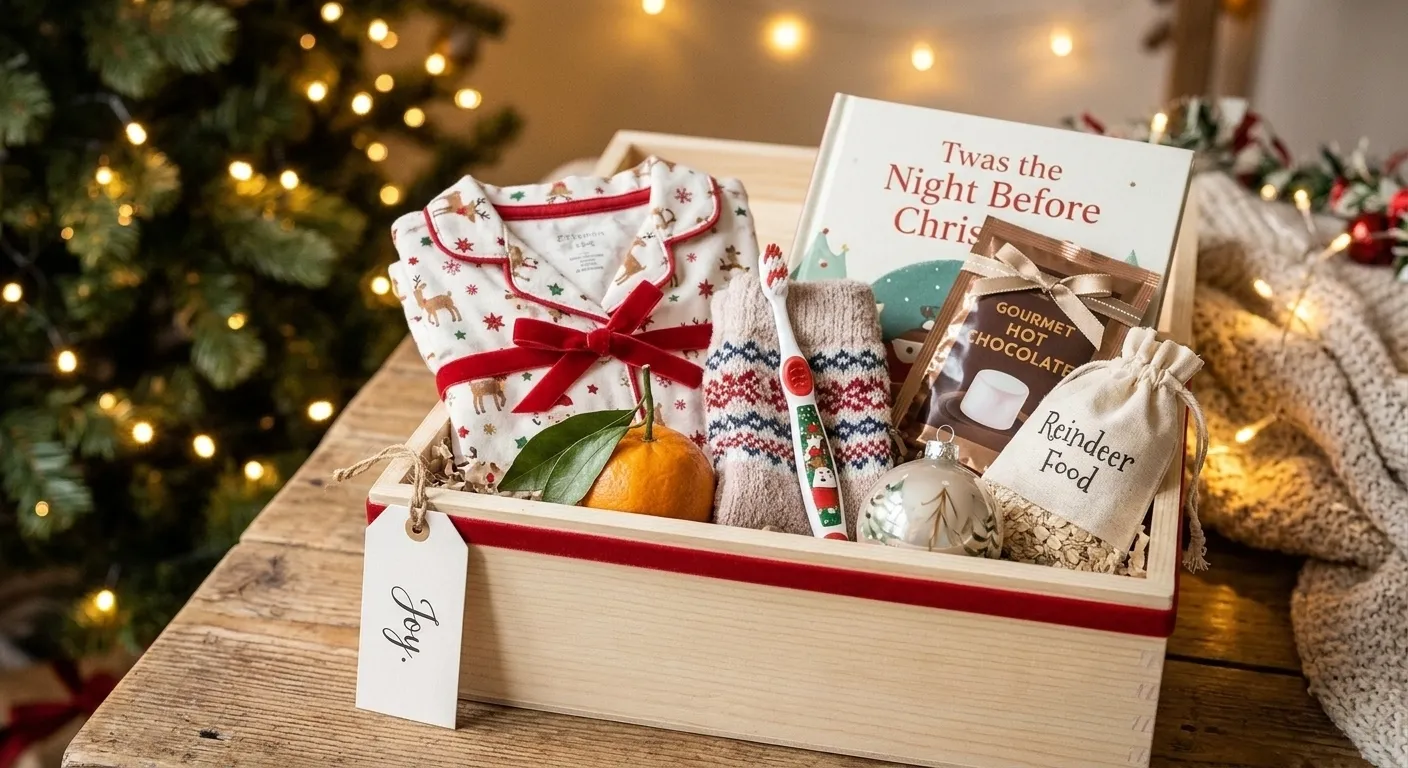
The best Christmas Eve boxes mix practical items that get used with festive items that create the magic. Too many practical things and the box feels like a chore. Too much novelty and it turns into clutter that’s forgotten by New Year.
The right balance depends on who’s opening the box. This simple guide isn’t a fixed rule, just a starting point you can adjust to suit your family:
| Recipient | Festive Items | Practical Items | Why the Mix Shifts |
| Young children (up to about 7) | Roughly two-thirds | Roughly one-third | Magic and make-believe matter most at this age |
| Older children (8–12) | About half | About half | Activities take over as belief in the magic fades |
| Teenagers and adults | Roughly one-third | Roughly two-thirds | Comfort and usefulness matter more than novelty |
In practice, a box for a five-year-old might hold reindeer food, a North Pole letter and a festive storybook, with pyjamas and a toothbrush as the practical third. A teenager’s box flips that around: loungewear, socks and a pamper set, with one festive mug of hot chocolate as the treat.
Practical items earn their place because they’re used on the night and long after it. The strongest choices fit straight into the Christmas Eve routine:
Try this: Ask whether each practical item will be used within the next week. If the answer is no, it’s probably better saved for another occasion.
Festive items have no job except to make the evening feel special. For younger children, they’re the part of the box they’ll remember most. Good examples include:
One or two well-chosen magic items carry more weight than a handful of small novelties competing for attention.
Keepsakes sit between the two groups. They’re festive in feel but kept for years, so they give the box lasting value. Ideas include:
Keepsakes work especially well when they build year on year. A child who collects a new dated bauble every Christmas Eve ends up with a small collection that tells the story of their childhood.
Bottom line: Lean festive for little ones, lean practical as they grow, and add one keepsake at any age to make the box worth remembering.
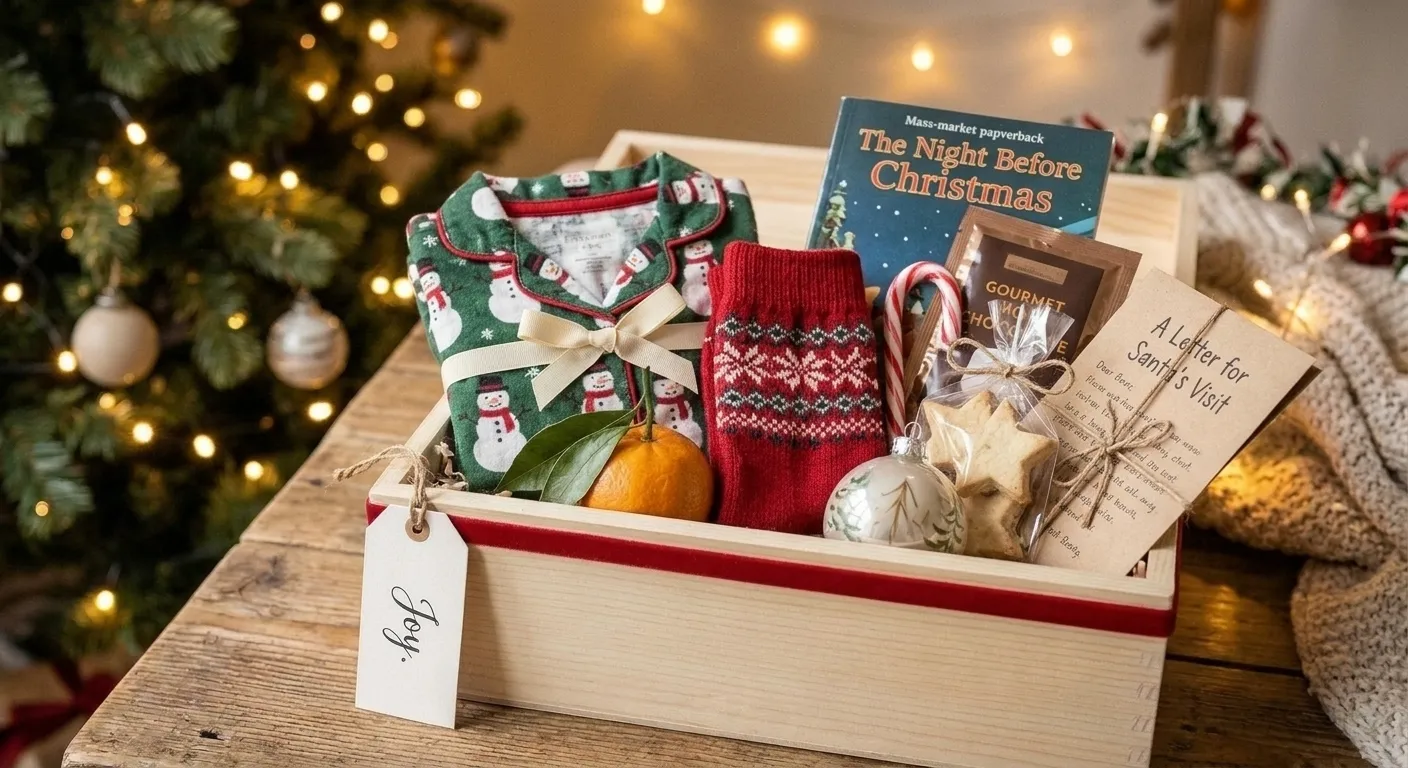
Whatever the mix, the total cost adds up quickly, so it helps to plan around a budget. A Christmas Eve box doesn’t need to be expensive to feel special. Its job is to slow the evening down and add a little magic, and that works just as well at £10 as at £30.
Each tier below builds on the five-part formula, adding more slots as the budget grows, so your Christmas Eve box contents stay balanced however much you spend. The prices are rough guides only, because costs vary between shops and change from year to year. They cover the contents, not the box itself.
This tier relies on things you already have, free resources and a few cheap treats.
Why it works: The magic comes from the letter and the reindeer food, not from the price. A borrowed or pre-loved book still fills the bedtime story slot, and the hot chocolate keeps the evening cosy.
At this level, you can add the anchor item most children look forward to: new pyjamas.
Why it works: Pyjamas take up the largest share of the budget, and that’s the right priority. They get worn that night and through the holidays, so they give you the most value for your money.
This tier fills all five slots with new items and adds a small gift.
Why it works: Every part of the formula is covered without turning the box into a second round of Christmas presents. The extra spend goes on quality and a shared film, not on more items.
A few habits can bring the cost down every year:
Key takeaway: Spend first on pyjamas and a bedtime book, then fill the gaps with DIY and multipack extras.
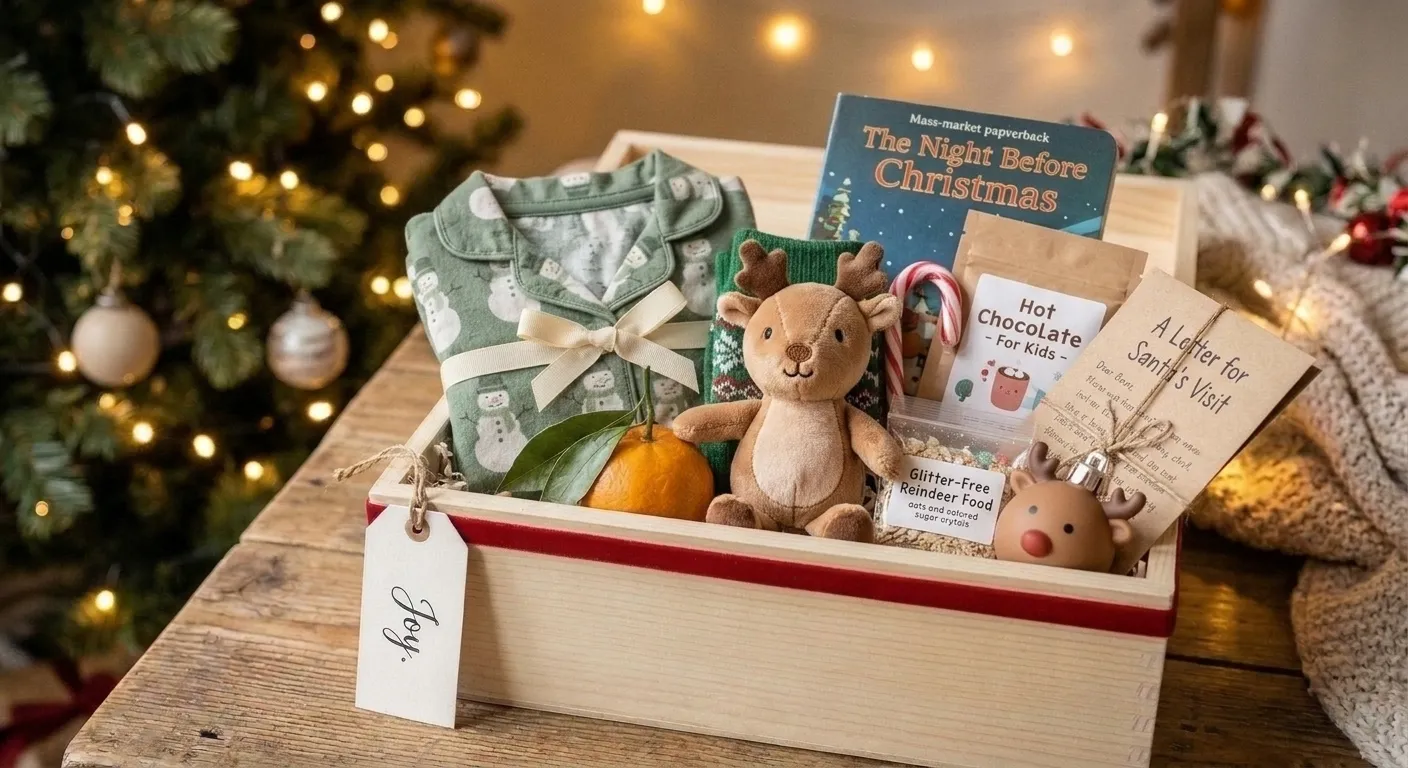
Saving money should never mean cutting corners on safety, especially for little ones. A cheap toy from an unknown online seller can look identical to a branded one, but the difference often lies in how it was made and tested.
Many of the risks in a Christmas Eve box come from small extras, novelty items and treats rather than the main gifts. A quick check of each item before it goes in the box is worth the few minutes it takes. These checks apply to every age, but they matter most for children under five.
Toys sold in Great Britain should carry the UKCA mark or the CE mark. Either mark is the manufacturer’s declaration that the toy meets UK safety requirements. Neither proves a toy has been independently tested, so where you buy matters just as much as the label.
Before you buy:
Safer alternative: Buy small toys from established retailers or well-known brands, which are more likely to meet UK standards and recall faulty products quickly.
These three hazards are easy to miss because they often hide inside fun, festive extras.
Small parts: Look for the warning “Not suitable for children under 36 months” or the symbol of a crossed-out child’s face. Remember that older siblings’ boxes may contain small pieces a toddler could reach.
Button batteries: Coin-shaped lithium batteries can cause serious internal burns within hours if swallowed. They often turn up in:
Choose items with a battery compartment secured by a screw, and keep spare batteries out of reach. If you think a child has swallowed a button battery, go to A&E straight away. Don’t wait for symptoms to appear.
Loose magnets: Small, powerful magnets can attract each other inside the body if more than one is swallowed, causing serious injury. Check magnetic building sets, fridge magnets and novelty puzzles for magnets that could come loose.
Safer alternative: For young children, pick a soft toy, a chunky board book or a wind-up torch instead of battery-powered novelties.
Edible treats are some of the most popular Christmas Eve box contents, but some carry a choking risk for young children:
For allergies, check every label for nuts, milk, egg and gluten. Mince pies and festive biscuits can contain nuts, and treats sold loose or made at home may not list all their ingredients. If a child is visiting from another family, ask their parents before including any food.
Safer alternative: A hot chocolate kit, a soft gingerbread biscuit or a clementine works for most ages with fewer risks.
Pyjamas are the anchor item in most boxes, so their label deserves a second look. Under UK rules, children’s nightdresses, nightshirts and dressing gowns must meet strict flammability standards. Children’s pyjamas don’t always have to pass the same test, but they must be clearly labelled.
Look for one of these labels:
Fancy dress costumes are not nightwear, so don’t let children sleep in them. Close-fitting pyjamas are generally safer than loose, flowing styles, especially around candles, open fires and log burners on Christmas Eve.
Reindeer food is a much-loved part of the box, but many shop-bought and homemade versions contain glitter. Glitter is a plastic that birds and other wildlife can swallow when they peck at the mix in the garden.
Make it safely with:
Leave out raisins, sultanas and chocolate, which are toxic to dogs and could harm pets that find the mix on Christmas morning.
Quick safety checklist: Before you close the box, check the age label and marking on each toy, look for button batteries and loose magnets, read food and allergy labels, confirm the pyjama label, and make sure the reindeer food is glitter-free.
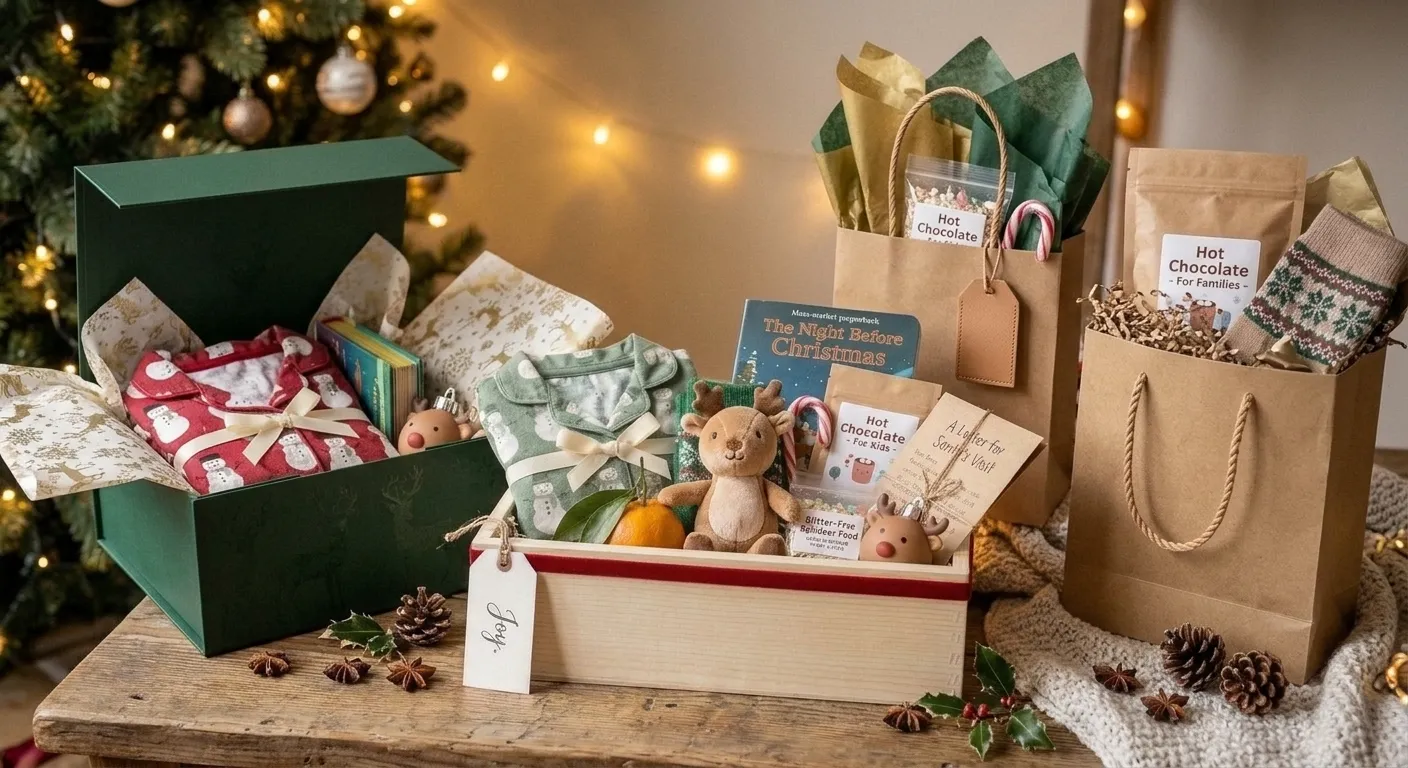
With the contents sorted and safety checked, the container becomes the next important choice. It’s the first thing anyone sees on Christmas Eve, and it decides what fits inside. A box that’s too small squashes the pyjamas, while one that’s too big makes even a generous selection look sparse.
Start with the bulkiest item, which is usually folded pyjamas, a boxed film or a board game. Then choose a container with a little spare room for padding. This table matches common Christmas Eve box contents to suitable sizes:
| Contents | Suggested Container |
| Fillers and treats only | Small paper party bag (14×24.5×7cm) or small twist handle bag (18×22×8cm) |
| Pyjamas, book and treats | Medium boutique bag (20×24×10cm) or medium magnetic gift box |
| Full family box with film and games | Large boutique bag (40×30×13cm) or large magnetic gift box |
Here’s how that works in practice. A single child’s box with folded pyjamas, a paperback, a hot chocolate kit and reindeer food fits comfortably in a 20×24×10cm bag, with room for a layer of tissue on top. Add a board game and a DVD for the whole family, and you’ll need the extra depth of a 40×30×13cm bag or a large box.
Quick tip: Flat items such as a jigsaw or a picture book fit better in a wide container than a tall one. Tall items, such as a bottle or a boxed game standing upright, need height more than width.
Each container type suits a different kind of Christmas Eve box. The right choice depends on your budget, how special you want the reveal to feel and whether you plan to reuse it.
Box or bag? A box gives a stronger reveal and lasts longer. A bag is quicker, lighter and usually cheaper. Both work, as long as the size fits the contents.
Personal touches turn a plain container into their Christmas Eve box, the one they’ll recognise every year. Most take minutes and cost very little:
For younger children’s mini boxes, party bags with stickers give you a ready-made way to decorate without extra supplies. They’re especially handy if you’re making matching treat bags for several siblings.
Avoid permanent pen or glued decorations on a box you plan to reuse. Removable labels and tied ribbon let you update the name or year without spoiling the box.
How you pack the box shapes the moment it’s opened. A good arrangement builds anticipation as children dig deeper, rather than showing everything at once.
Try this: Number the items with small tags in the order you’d like them opened, from the hot chocolate to the bedtime book. It quietly guides the evening towards sleep.
In short: Choose the size by the bulkiest item, the style by how special you want the reveal to feel, and pack it so the magic comes first.
A good box is also one you can use again, which makes it greener as well as cheaper. A box used once, glittery wrap and plastic novelties can all end up in the bin by Boxing Day. The good news is that the most sustainable choice is also one of the most traditional: a sturdy box you bring out every 24 December.
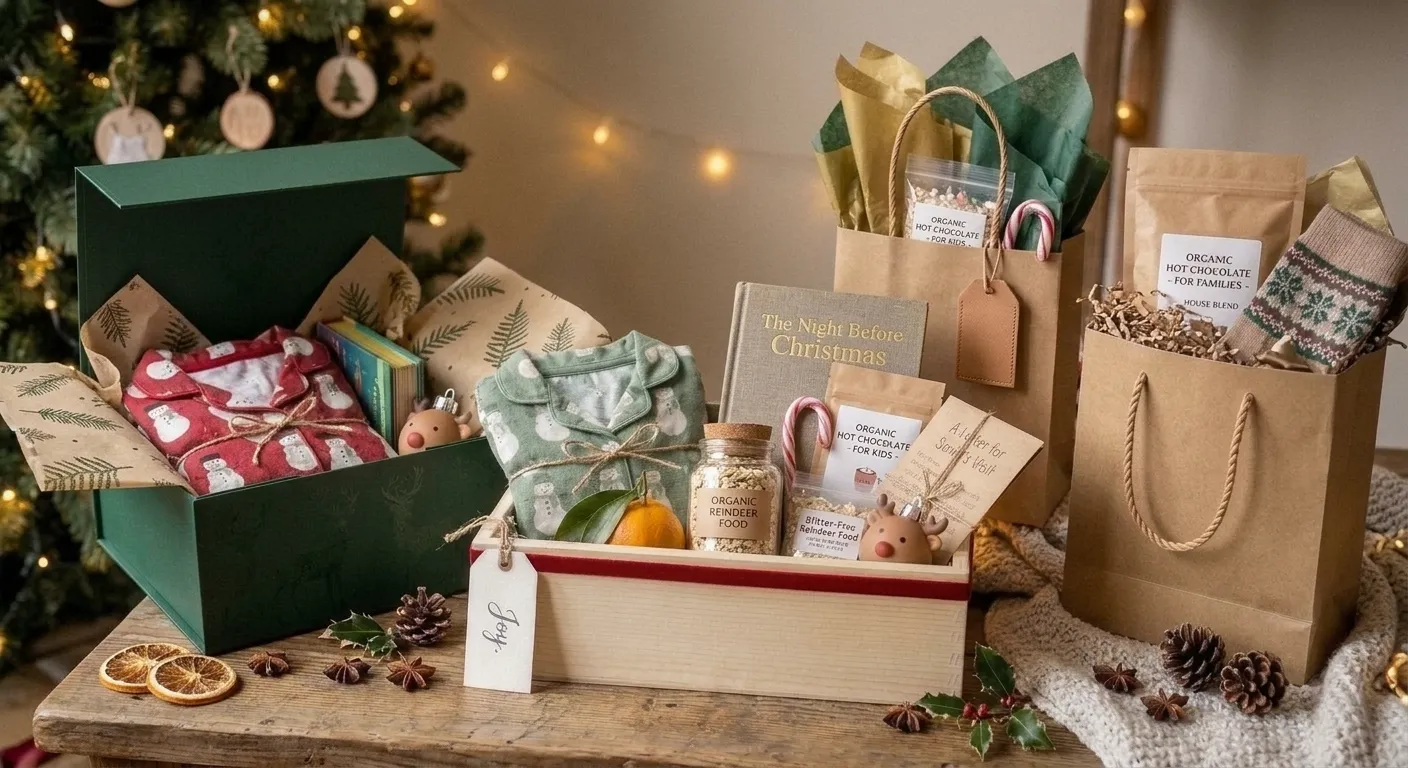
A reusable box does more than cut waste. Children start to recognise it. When the same box appears on the doorstep or at the end of the bed each year, it signals that Christmas Eve has arrived before the lid even lifts.
Over time, the box becomes a small family heirloom. Some families add a new name label or date tag each year. Others keep it with the decorations, so taking it out becomes part of the build-up to Christmas.
To make a box last for years:
Not every box will be reused, and that’s fine. The aim is to make sure whatever you use can be recycled afterwards. As a general rule, paper beats plastic. Paper bags, tissue, shredded paper and card are widely recycled, while cellophane, plastic shred and plastic-coated wrap often aren’t.
Try the scrunch test. Scrunch a piece of wrapping or padding into a ball in your hand:
Where possible, avoid:
Recycling rules vary between councils, so check your local council’s website if you’re unsure about a specific item.
Plain kraft paper is one of the easiest options to recycle, and its natural look suits a cosy, rustic Christmas Eve box. Brown kraft paper bags with twisted handles can be decorated with stamps, twine and paper tags, then go straight into the paper recycling once their festive job is done.
What goes inside the box matters as much as the packaging. Low-waste contents are items that get used up, used often or create a memory rather than clutter.
Swapping one novelty toy for a voucher or a useful item reduces waste and often feels more personal. An experience also gives children something to look forward to after Christmas has passed.
Key takeaway: Reuse the box, recycle the padding and fill it with things that get used, eaten or remembered.
With the contents chosen and the box ready, the final piece is timing. Spreading the work over a few weeks makes a Christmas Eve box easier and cheaper to put together. Leave it until the last minute, and you’re more likely to pay full price, run out of pyjamas in the right size or miss a delivery.
This timeline breaks the job into small steps, so nothing lands on the same busy week.
Delivery note: If you’re ordering anything online, place your orders well before UK Christmas delivery cut-offs. Royal Mail and most couriers publish their last recommended posting dates each autumn, and services get busier as the 25th approaches. Ordering early leaves room for delays, wrong sizes or returns.
For most families, the best time is late afternoon or just after tea, before bath and bedtime. This timing matches the box’s purpose. Children have time to change into their new pyjamas, watch the film, drink their hot chocolate and read the bedtime story, all at an unhurried pace.
Give it too early, and the excitement wears off before bedtime. Give it too late, and the film and story get squeezed into a rush, which undoes the calm you’re trying to create.
A little theatre makes the moment more special. Try one of these:
Keep the box out of sight, but somewhere easy to reach on the 24th.
Even with good planning, a few common slip-ups can take the shine off. Most come from losing sight of what the box is for, and each is easy to fix once you know what to look for.
It’s tempting to keep adding treats and small toys until the box looks full. The result is often a sugar rush and a pile of distractions at exactly the time you want children to slow down.
Picture a box with a selection box, a bag of sweets, a light-up toy and a slime kit. By 8pm, nobody wants to go to bed. Swap two of those for a hot chocolate kit and a sticker book, and the evening feels very different.
Fix it: Keep to one edible treat and one small activity. Use padding, not extra items, to make the box look generous.
A beautiful container is easy to fall for, but buying it before you know what’s going inside often leads to one of two problems. Either the pyjamas and board game won’t fit, or a large box looks half-empty with only a few small items inside.
Ordering the box early still makes sense. Just write a quick contents list first, then size the container around the bulkiest item.
Fix it: List the five slots, note the largest item, then choose the container.
When the two traditions blur together, you end up buying similar items twice and losing what makes each one special. Noisy toys, novelty gadgets and big chocolate hauls belong on Christmas morning, when the energy is meant to be high.
The Christmas Eve box has a quieter job. If an item would make a child more excited rather than more settled, it probably belongs in the stocking instead.
Fix it: Sort items into two piles as you buy them: “wind down” for the box and “wake up” for the stocking.
Even a well-chosen box can miss the mark if the timing and order don’t support sleep. Opening it too late, starting with the most exciting item, or choosing a long film for young children can all push bedtime back.
Think about how the evening will actually unfold. Pyjamas go on first, then the film and hot chocolate, and the bedtime book comes last. For toddlers, a short animation works better than a full-length film.
Fix it: Plan the box as a sequence that ends in bed, not just a collection of gifts.
The best Christmas Eve box isn’t the biggest or the most expensive. It’s the one that helps your family slow down, share a quiet evening and drift towards bed with a little magic in the air.
The five-part formula keeps it simple: something to wear, something to watch, something to read, something to eat or drink, and something to do. From there, three questions shape the details:
Your family’s version will look different from anyone else’s, and that’s the point. Some households keep one shared box for everyone. Others give each child their own, with a dated bauble added every year. Over time, those small choices become your own traditions.
When you’re ready to pull it all together, start with a container you’ll be glad to bring out again. A sturdy magnetic gift box can return every 24 December, while a simple kraft bag suits a smaller or last-minute box.